
Your account
News
The future rarely gives us much notice. Good planning means anticipating it anyway.
3 September 2026 | News
One of the responsibilities of leadership - whether of a business, an essential utility or an island - is to look beyond the immediate problem and ask what the world might look like in five, ten or twenty years’ time.
We cannot predict the future precisely, but we can identify the forces that are likely to shape it.
Three are particularly prominent in my mind at the moment:
1. Global conflict and geopolitical instability
Events thousands of miles away can affect us remarkably quickly. Conflict is disrupting shipping routes, fuel and commodity markets, insurance, manufacturing and global supply chains, and all of this affects availability, prices and inflation.
For an island dependent upon imported fuel, equipment and materials, energy security and supply-chain resilience are not, therefore, abstract geopolitical questions. They are local ones.
2. Climate change, the developing El Niño and adaptation
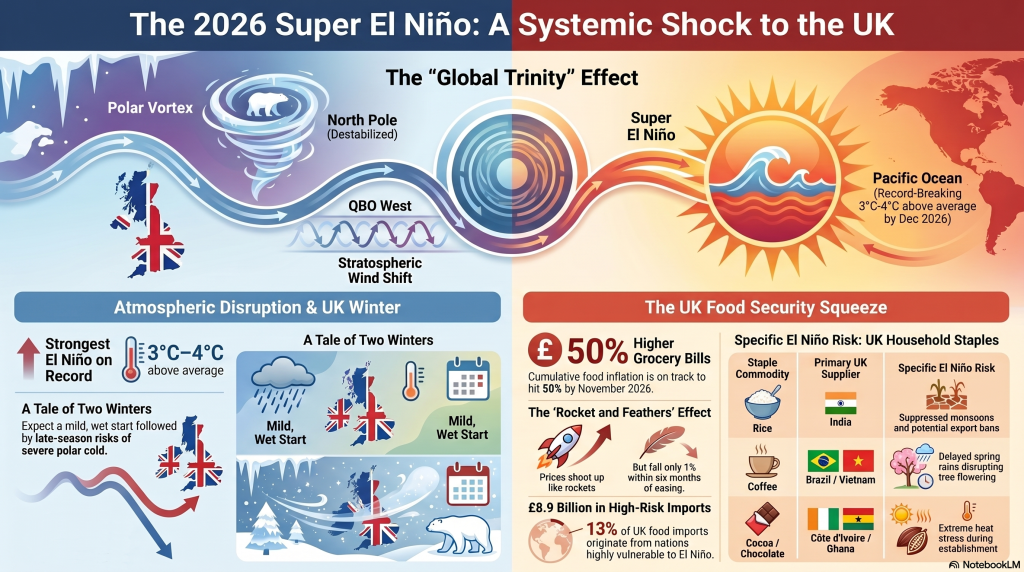
The climate itself is becoming another source of uncertainty. The current El Niño is forecast to become exceptionally strong. Its effects will vary around the world, but for those of us in north-west Europe it increases the probability of wetter and stormier conditions during the coming autumn and early winter, while globally it is likely to affect agriculture, energy production, water supplies and supply chains - again affecting availability, prices and inflation.
Overlay that natural variability on a steadily warming climate and the lesson is not that we know precisely what Alderney's weather will be in any particular month. It is that infrastructure designed to last for decades must be capable of operating in a climate that will not necessarily resemble the one in which it was originally built.
3. The electricity system itself is changing
We are entering what the International Energy Agency calls the “Age of Electricity”. Electric vehicles, electric heating and cooling, digital infrastructure and new technologies are increasing demand. At the same time, electricity is increasingly being generated differently, through solar, wind and other renewable sources, supported by batteries, smart controls and a skilled workforce, and in the context of increasingly flexible patterns of consumption.
That transition creates enormous opportunities, but it also means that tomorrow's electricity system cannot simply be yesterday's system with a few more cables attached to it.
For Alderney, these three forces intersect.
We need infrastructure that can withstand more challenging conditions. We need greater energy independence and less exposure to imported fossil fuels. We need a grid capable of accommodating renewable generation, storage and new patterns of demand. We need access to a sufficiently educated and skilled workforce, capable of supporting an essential service 24/7. And we need to achieve all of this while maintaining the safety, reliability and affordability that people rightly expect from their electricity supply.
None of this means attempting to predict precisely what happens next. It means retaining options, strengthening resilience and investing before vulnerabilities become crises.
The cheapest time to strengthen critical infrastructure is rarely after it has failed. The easiest time to diversify an energy system is rarely during an energy crisis. And the best time to prepare for a changing climate is not after the storm arrives.
For a small island particularly, resilience has to be designed in.
That, to me, is what stewardship means: making sensible decisions today so that those who come after us inherit an electricity system - and an island - better prepared for the world they will actually live in, rather than the world we grew up in.
Latest information
News, updates and blog
Read the latest service notices, maintenance updates and news from across Alderney Electricity.