
Your account
News
Power Cuts on Alderney: Understanding the Challenges
10 October 2025 | News
In late September, many residents experienced a temporary power outage following a deliberate shutdown in the Power Station to manage an incident and protect both our staff and the community.
While no one wants the lights to go out, this event highlights some important realities: power cuts, whether planned or unplanned, are part of island life; running electricity on an isolated island comes with unique challenges; and safety is always our top priority.
Why Power Cuts Happen
Alderney is fortunate to have its own local power system and, unlike Guernsey or the UK, we are not connected to a larger grid. This means the Island depends on a small number of generators at the Power Station. If a generator trips or a network fault occurs, the impact can be immediate and widespread.
Historical data shows Island-wide blackouts are rare. Between 2016 and 2025, AEL recorded 24 full blackouts caused by mechanical faults, electrical issues, operator error, commissioning, or network faults. The frequency has decreased since the commissioning of modern Perkins generators, from 2–3 full blackouts per year on the older Paxman generators to roughly one per year now.
While modern systems have reduced outages, software and commissioning activities can still create short-term disruptions. These figures underline a simple truth: on a small, stand-alone electricity system, and one integrating new technologies, power outages are unavoidable.
Localised Outages: Planned and Unplanned
Most localised outages are planned to allow engineers to carry out essential maintenance, integrate new equipment, or upgrade the network. We aim to give residents advance notice of planned work, real-time updates on social media, and clear explanations when unplanned events occur.
Unplanned outages can occur due to urgent safety requirements or unexpected network faults. Strengthening a 75-year-old system is complex, and safety must come first. It is rarely possible, or safe, for engineers to work while equipment remains live.
Changes to health and safety regulations now prohibit working on live equipment in most circumstances, so small or system-wide power outages are sometimes necessary to work safely.
Our long-term strategy, including network upgrades and smart meter installation, aims to reduce both the frequency and duration of power interruptions. Smart meters, which provide real-time monitoring of low-voltage circuits, will allow us to detect faults early, respond faster, and often prevent wider network issues.
Safety: Our Absolute Priority
Electricity is inherently dangerous. Every incident, from generator trips to equipment faults, is managed with safety as the first consideration.
In the last incident, a spanner inadvertently bridged live and isolated busbars in the Low Voltage (LV) distribution panel, resulting in the hospitalisation of one of our electricians. The controlled Island-wide shutdown protected both staff and the public while power was restored safely within hours.
This demonstrates the professionalism and rapid response of our team, as well as the importance of learning from every incident.
Our approach to safety includes:
- Rapid and professional response: Every incident is assessed immediately, risks isolated, and power restored safely.
- Thorough investigation and learning: Every fault, accident, or near-miss is investigated. Immediate causes, underlying factors, and systemic weaknesses are analysed, and corrective actions implemented.
- Cultivating a just culture: Staff are encouraged to raise safety concerns without fear. Accountability and safety go hand-in-hand.
- Embedding a culture of accountability, safety and continuous learning among all staff.
Building a Resilient System
We continue to invest in:
- Network upgrades: Replacing substations, upgrading ageing cabling, and improving transformers to reduce outage risk.
- Monitoring technology: Smart meters and real-time sensors to detect potential problems early.
- Procedures and training: Dynamic work permits, updated risk assessments, and Personal Protective Equipment (PPE) for all live-adjacent work.
Looking Ahead: Reliability Through Learning
Power cuts are not signs of failure but part of the reality of managing an isolated, high-stakes system. What matters is how these events are managed: safely, professionally, and with a commitment to learning.
Our future plans include:
- Continuing Island-wide network upgrades.
- Rolling out smart meters to enable predictive maintenance and faster responses.
- Integrating renewable energy and battery storage to improve resilience.
These measures aim to reduce both the frequency and impact of outages, and reinforce why we do what we do: protecting the community, safeguarding staff, and ensuring reliable electricity for Alderney.
How We Compare Globally
Small islands worldwide face similar challenges. Samoa, Puerto Rico and Cuba have all experienced extended blackouts over the last few years due to ageing infrastructure, mechanical failures, or natural events.
Compared with these islands, Alderney’s system is robust, and the frequency of full Island-wide blackouts is relatively low. Planned maintenance, continuous upgrades, and a smarter network and monitoring systems help minimise outages while also ensuring safety.
Transparency, Teamwork and Trust
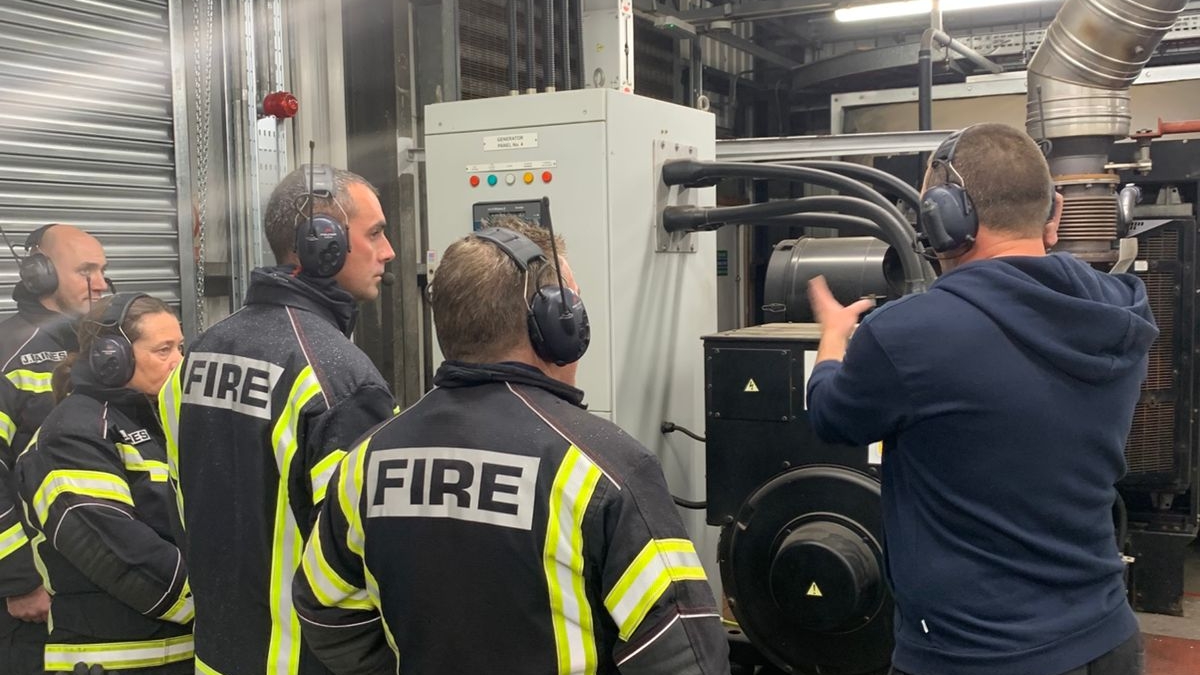
At Alderney Electricity, we are committed to safety, transparency and continuous improvement. Every incident provides an opportunity to learn, refine our systems, and strengthen the resilience of our network.
While we strive for an uninterrupted power supply to the Island, it is not always possible. We ask our community to understand the realities of island electricity: some disruptions are unavoidable, and some are planned for safety reasons, but all are managed with care, consideration and a commitment to learning.
It is important to recognise the people at the heart of this work. The quiet dedication and calm professionalism of our staff, often working under pressure in challenging circumstances, ensures the safety of the team, the community, and the continued reliable operation of Alderney’s electricity system.
Latest information
News, updates and blog
Read the latest service notices, maintenance updates and news from across Alderney Electricity.